
Publications
MentalGame: Predicting Personality-Job Fitness for Software Developers Using Multi-Genre
Games and Machine Learning Approaches

ABSTRACT
Personality assessment in career guidance and personnel selection traditionally relies on
self-report question naires, which are susceptible to response bias, fatigue, and
intentional distortion. Game-based assessment offers a promising alternative by capturing
implicit behavioral signals during gameplay. This study proposes a multi genre serious-game
framework combined with machine-learning techniques to predict suitability for software
development roles. Developer-relevant personality and behavioral traits were identified
through a systematic lit erature review and an empirical study of professional software
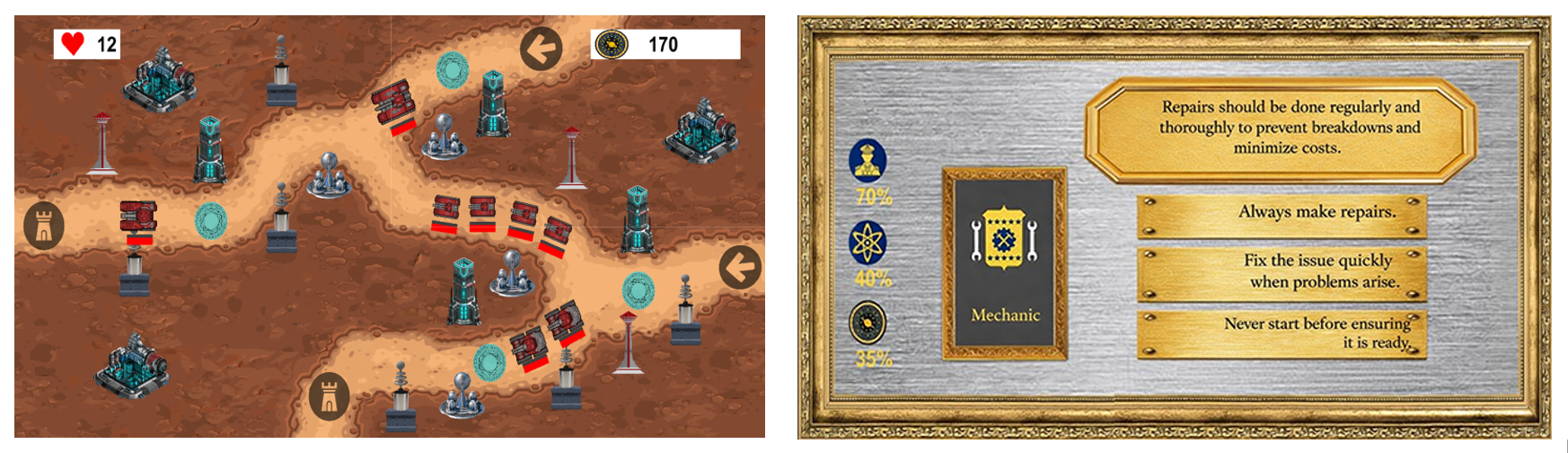
engineers. A custom mobile game was designed to elicit behaviors related to problem solving,
planning, adaptability, persistence, time management, and informa tion seeking. Fine-grained
gameplay event data were collected and analyzed using a two-phase modeling strategy where
suitability was predicted exclusively from gameplay-derived behavioral features. Results
show that our model achieved up to 97% precision and 94% accuracy. Behavioral analysis
revealed that proper candidates exhibited distinct gameplay patterns, such as more wins in
puzzle-based games, more side challenges, navigating menus more frequently, and exhibiting
fewer pauses, retries, and surrender actions. These findings demonstrate that implicit
behavioral traces captured during gameplay is promising in predicting software-development
suit ability without explicit personality testing, supporting serious games as a scalable,
engaging, and less biased alternative for career assessment.
AI in Mental Health: Emotional and Sentiment Analysis of Large Language Models'
Responses to Depression, Anxiety, and Stress Queries

ABSTRACT
Depression, anxiety, and stress are widespread mental health concerns that increasingly
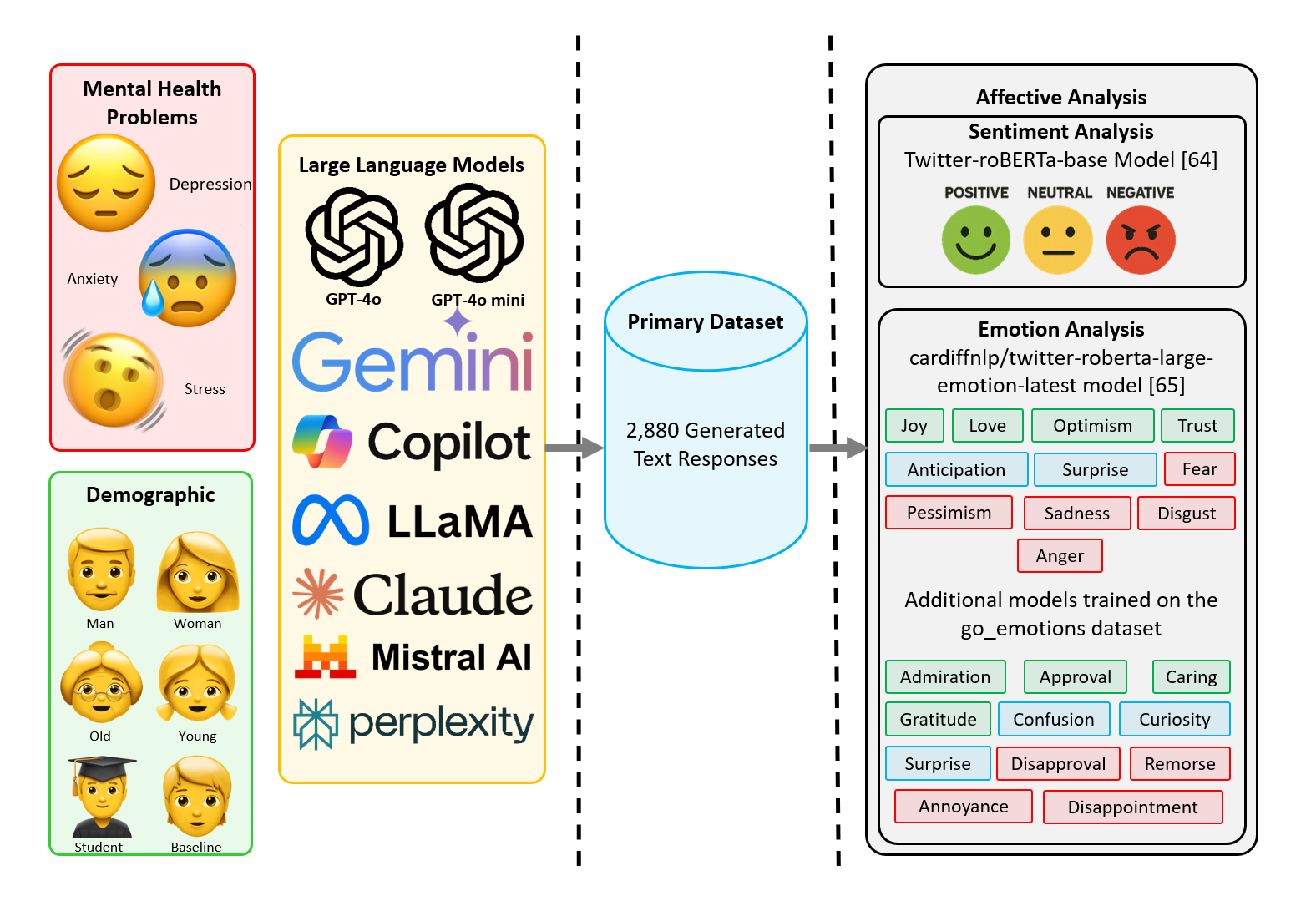
drive individuals to seek information from Large Language Models (LLMs). This study
investigates how eight LLMs (Claude Sonnet, Copilot, Gemini Pro, GPT-4o, GPT-4o mini, Llama,
Mixtral, and Perplexity) reply to twenty pragmatic questions about depression, anxiety, and
stress when those questions are framed for six user profiles (baseline, woman, man, young,
old, and university student). The models generated 2,880 answers, which we scored for
sentiment and emotions using state-of-the-art tools. Our analysis revealed that optimism,
fear, and sadness dominated the emotional landscape across all outputs, with neutral
sentiment maintaining consistently high values. Gratitude, joy, and trust appeared at
moderate levels, while emotions such as anger, disgust, and love were rarely expressed. The
choice of LLM significantly influenced emotional expression patterns. Mixtral exhibited the
highest levels of negative emotions including disapproval, annoyance, and sadness, while
Llama demonstrated the most optimistic and joyful responses. The type of mental health
condition dramatically shaped emotional responses: anxiety prompts elicited extraordinarily
high fear scores (0.974), depression prompts generated elevated sadness (0.686) and the
highest negative sentiment, while stress-related queries produced the most optimistic
responses (0.755) with elevated joy and trust. In contrast, demographic framing of queries
produced only marginal variations in emotional tone. Statistical analyses confirmed
significant model-specific and condition-specific differences, while demographic influences
remained minimal. These findings highlight the critical importance of model selection in
mental health applications, as each LLM exhibits a distinct emotional signature that could
significantly impact user experience and outcomes.
From Play to Prediction: Assessing Depression and Anxiety in Players’ Behavior
with Machine Learning Models

ABSTRACT
In today's society, depression and anxiety pose significant challenges for individuals
across various age groups, emphasizing the need for timely identification to facilitate
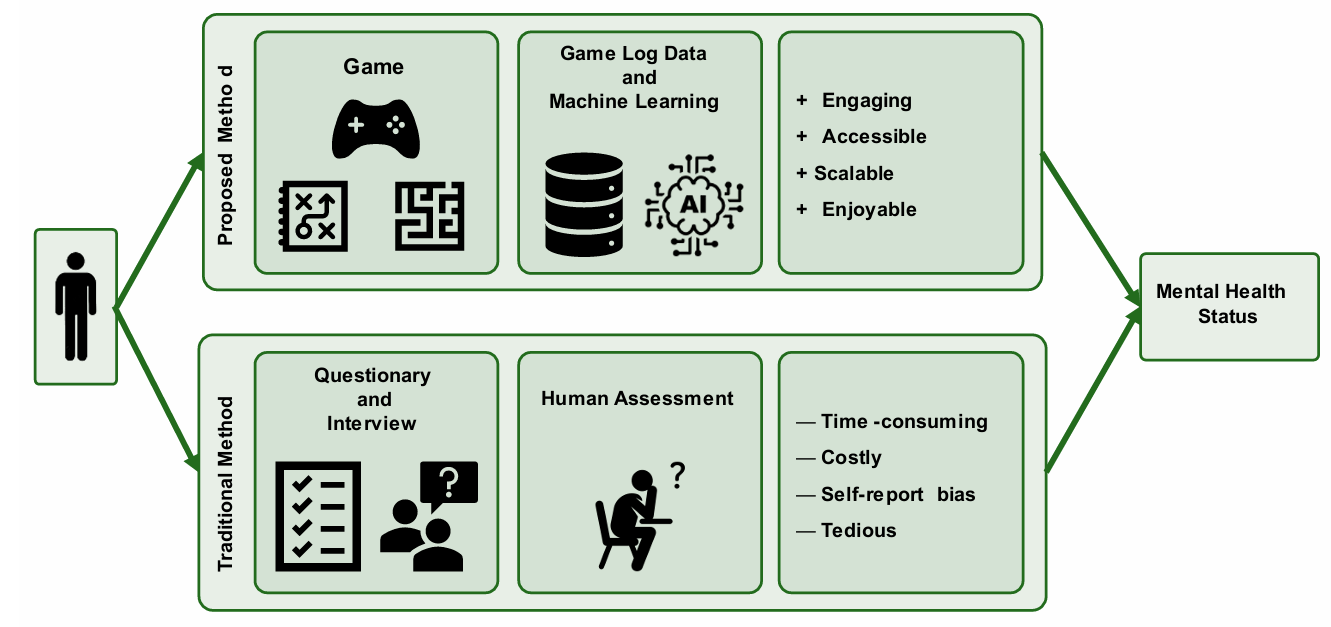
effective treatment and prevent future complications. However, current methods of assessing
mental health often rely on self-reporting, which can be biased and tedious. This paper
explores the potential of utilizing artificial intelligence for continuous, unobtrusive
monitoring of mental well-being through the analysis of gameplay log data in a multi-genre
game involving 64 participants with Machine learning algorithms, specifically the NuSVC
model, achieved 93.75% accuracy, 94.44% precision, 93.75% recall, and a 93.72% F1-score for
identifying depression, while the GBM classifier attained 93.75% accuracy, 95.45% precision,
93.75% recall, and a 91.67% F1-score for detecting anxiety. These findings highlight the
potential of using game-based behavioral data as a potential indicator of mental health
status and offering an innovative approach for diagnosis that reduces the burden on
healthcare systems and makes mental health support more accessible to those reluctant to
seek help through conventional means.
Analyzing the Mathematical Proficiency of Large Language Models in Computer
Science Graduate Admission Tests

ABSTRACT
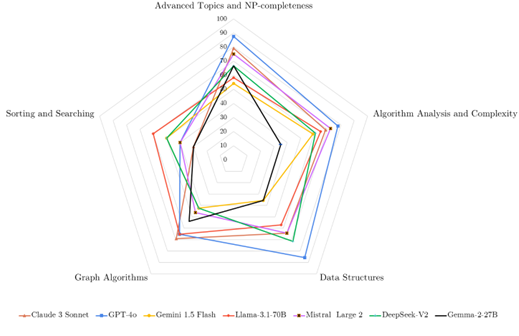
This study evaluates the performance of six prominent Large Language Models (LLMs) on
graduate entrance exam multiple-choice mathematics questions in computer science, computer
engineering, and information technology programs, with a focus on their cross-lingual
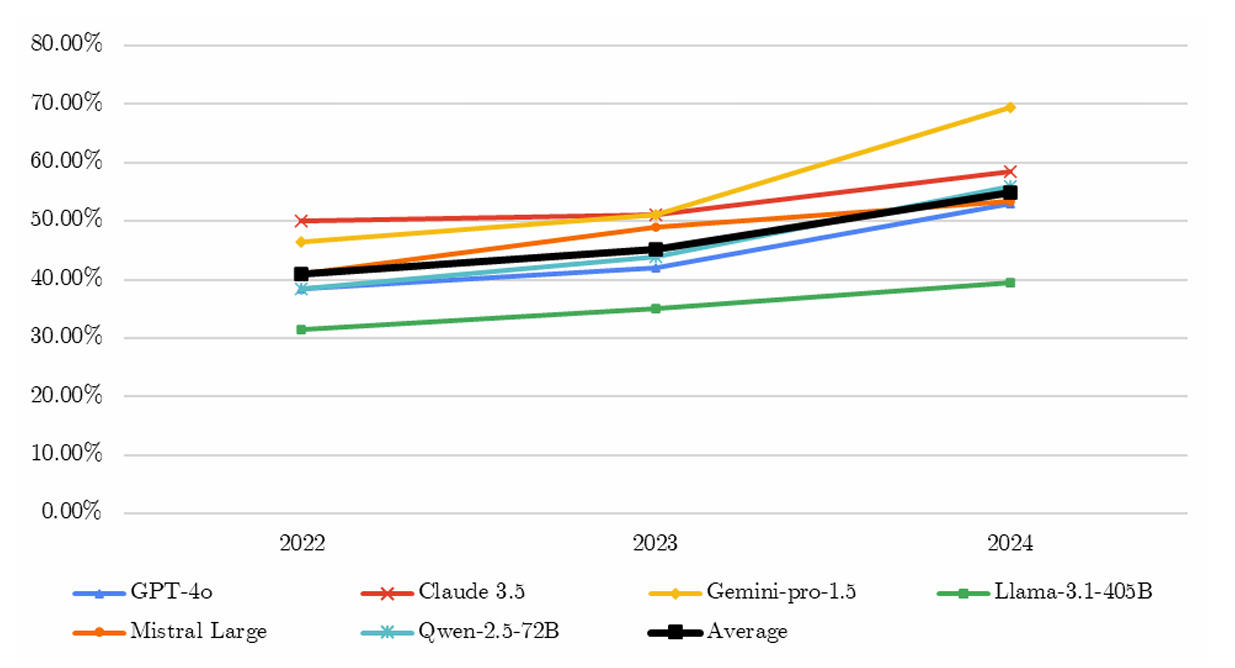
capabilities. The selected models, GPT-4o, Claude 3.5 Sonnet, Gemini 1.5 Pro, Llama 3.1
405B, Mistral Large 2, and Qwen 2.5 72B, were tested on 146 questions presented in both
Persian and English, spanning four key mathematical domains. Results reveal significant
variations in accuracy, with Gemini 1.5 Pro achieving the highest overall performance in
English (63.7%) and Claude 3.5 leading in Persian (52.0%). However, some models struggled
with maintaining consistent accuracy across languages, showing a cross-lingual performance
gap. The findings underscore the potential of LLMs in addressing complex mathematical tasks
but also highlight their current limitations, particularly in multilingual contexts. Notable
disparities in model performance point to the importance of architectural innovations and
multilingual training.
project
How Jungian Cognitive Functions Explain MBTI Type Prevalence in Computer
Industry Careers
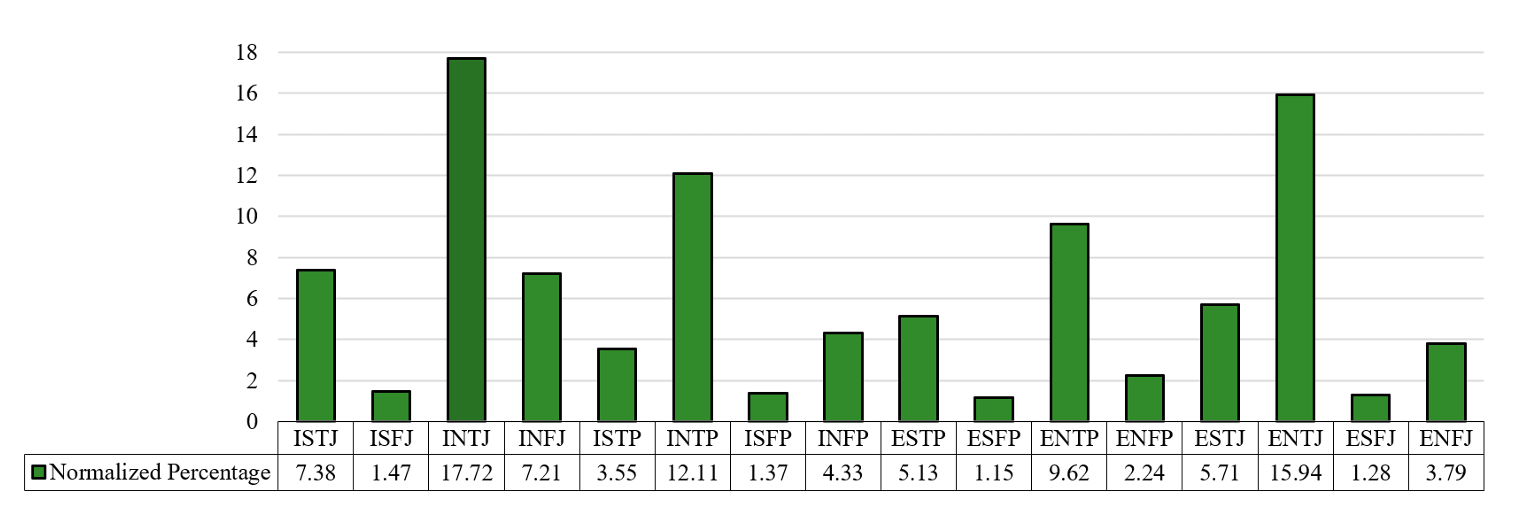
ABSTRACT
This study investigates the relationship between Carl Jung’s cognitive functions and success
in computer industry careers by analyzing the distribution of Myers-Briggs Type Indicator
(MBTI) types among professionals in the field. Building on Carl Jung’s theory of
psychological types, which categorizes human cognition into four primary functions, Sensing,
Intuition, Thinking, and Feeling, this study investigates how these functions, when combined
with the attitudes of Extraversion and Introversion, influence personality types and career
choices in the tech sector. Through a comprehen sive analysis of data from 30 studies
spanning multiple countries and decades, encompassing 18,264 individuals in computer-related
professions, we identified the most prevalent cognitive functions and their combinations.
After normalizing the data against general population distributions, our f indings showed
that individual Jungian functions (Te, Ni, Ti, Ne), dual function combinations (Ni-Te,
Ti-Ne, Si-Te, Ni-Fe), and MBTI types (INTJ, ENTJ, INTP, ENTP, ISTJ, INFJ, ESTJ, ESTP) had
significantly higher representation compared to general population norms. The paper
addresses gaps in the existing literature by providing a more nuanced understanding of how
cognitive functions impact job performance and team dynamics, offering insights for career
guidance, team composition, and professional development in the computer industry, and a
deeper understanding of how cognitive preferences influence career success in
technology-related fields.
Evaluating LLMs in Persian News Summarization

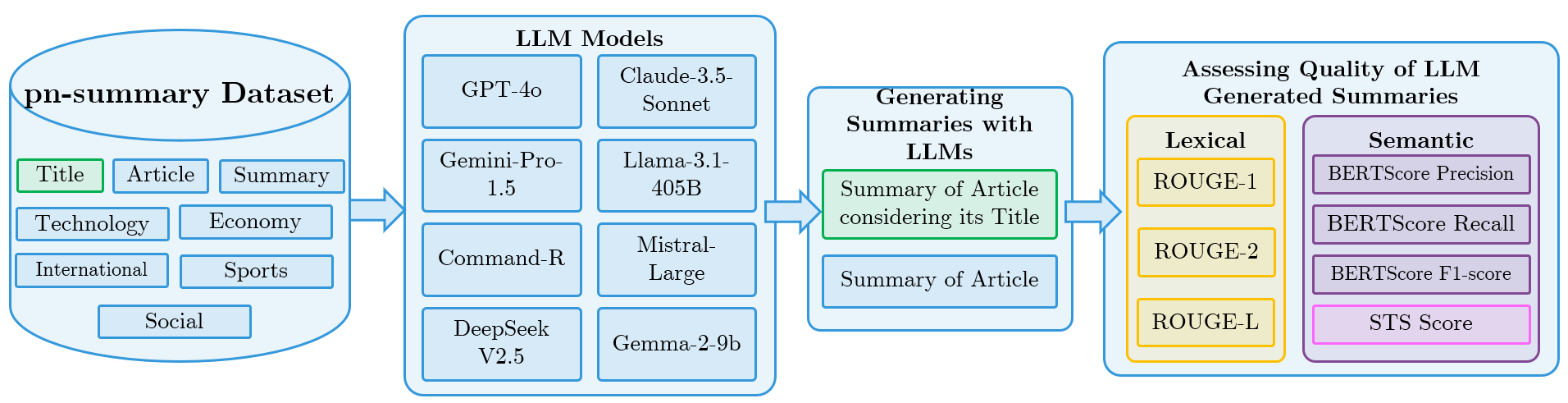
ABSTRACT
This study evaluates the performance of eight Large Language Models (LLMs) in Persian news
summarization: ChatGPT-4o, Claude-3.5-Sonnet, Gemini-Pro-1.5, Llama-3.1 405B, Command-R,
Mistral-Large-2, DeepSeek V2.5, and Gemma-2-9B. We assess these models across five news
categories: Economy, International, Sports, Technology, and Social, using the pn_summary
dataset. Our evaluation employs multiple metrics, including BERTScore and ROUGE, across two
input conditions: article-only and article-with-title. Results show that Llama-3.1 405b
performed best against reference summaries in the article only setting, achieving the
highest BERTScore F1 (50.60) and ROUGE-L (33.96) scores. Notably, including article titles
helped models produce summaries which aligned more closely to the reference summary,
increasing the average BERTScore F1 from 48.31 to 50.16 across most models. Moreover, when
comparing generated summaries to original articles, Mistral-Large-2 led with a BERTScore F1
of 48.09. In category-specific analysis, Mistral Large-2 consistently outperformed the
reference summaries across all news categories, with the most significant improvement in the
Economic category. This study provides valuable insights into the current capabilities of
LLMs for Persian summarization, highlighting their potential and the impact of input
structure on performance. Our findings contribute to the growing body of research on
multilingual summarization and have practical implications for Persian language processing
applications.
LLM Performance Assessment in Computer Science Graduate Entrance Exams
ABSTRACT
Medical images are one of the most important diagnostic tools at the doctor's disposal in
diagnosing the prevalence and nature of the disease, in addition to assessing its severity.
Medical science uses these images to help doctors diagnose diseases, find a more accurate
diagnosis, and develop an optimal treatment plan. Doctors use a variety of methods depending
on their purpose and imaging capabilities of the devices they use. The effectiveness of deep
neural networks encourages us to use them in analyzing medical images. In this project, due
to the importance of early detection of dentigerous lesions, studies are performed on dental
radiographic images, and a neural network classifier using the Tensorflow Library is
designed. A data set consisting of 936 radiographic images, a neural network designed and
implemented with 93% accuracy, and a userfriendly web application are the output of this
project
Hybrid Vision Transformer for Detection of Dentigerous Cysts in Dental
Radiography Images
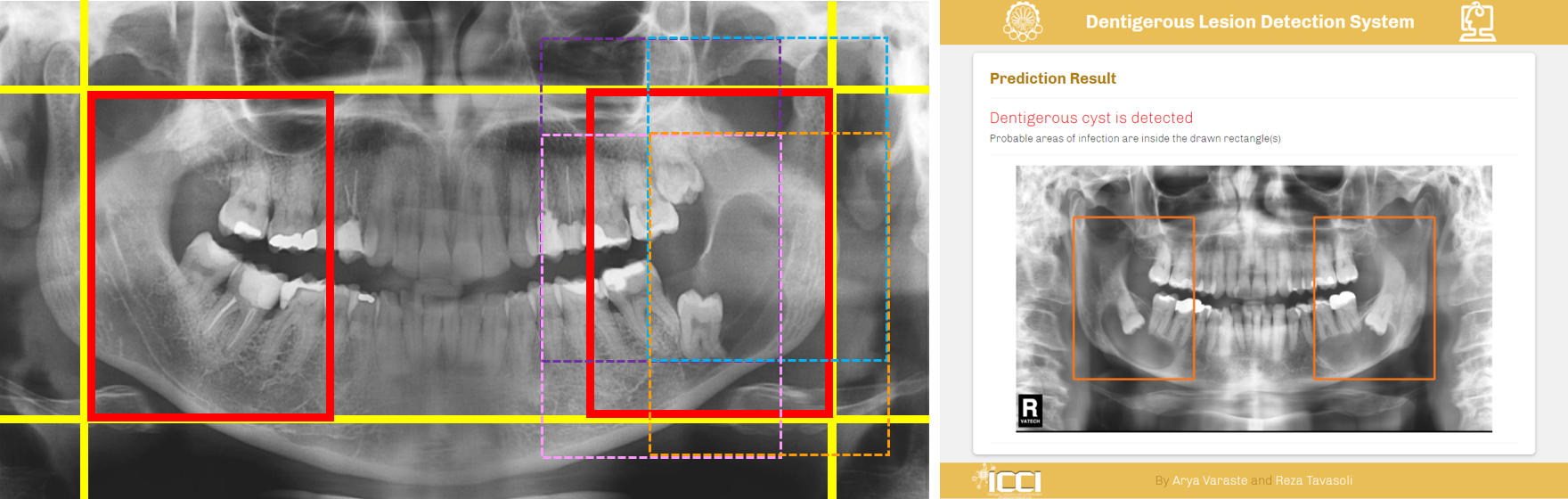
ABSTRACT
Medical images are one of the most important diagnostic tools at the doctor's disposal in
diagnosing the prevalence and nature of the disease, in addition to assessing its severity.
Medical science uses these images to help doctors diagnose diseases, find a more accurate
diagnosis, and develop an optimal treatment plan. Doctors use a variety of methods depending
on their purpose and imaging capabilities of the devices they use. The effectiveness of deep
neural networks encourages us to use them in analyzing medical images. In this project, due
to the importance of early detection of dentigerous lesions, studies are performed on dental
radiographic images, and a neural network classifier using the Tensorflow Library is
designed. A data set consisting of 936 radiographic images, a neural network designed and
implemented with 93% accuracy, and a userfriendly web application are the output of this
project.
Exploring the Relationship Between Gameplay Log Data and Depression &
Anxiety

ABSTRACT
Depression and Anxiety are prevalent mental health disorders affecting millions worldwide.
Identifying these disorders accurately and promptly is crucial to ensure that individuals
can receive appropriate treatment. This paper proposes using a game to identify behavioral
patterns that indicate depression and anxiety. Our study involved 56 university students. In
this paper, we used statistical tools such as calculating Correlation, Linear Regression,
Kolmogorov–Smirnov, ANOVA, and Mann–Whitney U test to analyze our data. For this research,
we designed a shooter and a memory-based game that can challenge disorders by creating
exciting and stressful moments. Using serious games offers several advantages over
traditional methods, like increasing accuracy and reducing bias by removing self-reports and
monitoring player behaviors for extended periods. Our results indicate that several
parameters are significantly related to depression and anxiety. These parameters include the
number of guesses and surrendering in memory games, manner of movements, losing perks,
losing lives, number of enemies colliding with the player, and number of playing to win in
shooter games. We also found that log size and skipping game tutorials in each game were
related to depression and anxiety. Lastly, age and getting help from others were identified
as significant factors. Overall, our research highlights the potential of games as an
alternative tool for assessing and understanding depression and anxiety disorders. By
leveraging the interactive nature of games, researchers and clinicians can gain valuable
insights into individuals' mental health conditions, leading to improved identification and
treatment outcomes.
MBTI-Personality Types and Traits of Professional Software Engineers

ABSTRACT
Apprehending the personality types of software engineers is essential for both individuals
and organizations, especially in software engineering, which heavily relies on teamwork and
soft skills. This paper explores various aspects and dimensions of personality exhibited by
software engineers, focusing on Iranian culture. To achieve this, we conducted a
comprehensive study that involved analyzing existing research on a global scale and a case
study specifically targeting professional software engineers in Iran. The Myers-Briggs Type
Indicator test was utilized to gather data, and the responses were carefully filtered,
resulting in 102 valid datasets for analysis, representing both the private and public
sectors. Our methodology included the development of a comprehensive questionnaire comprised
of personal and standardized MBTI questions in Persian. The findings of our study indicate
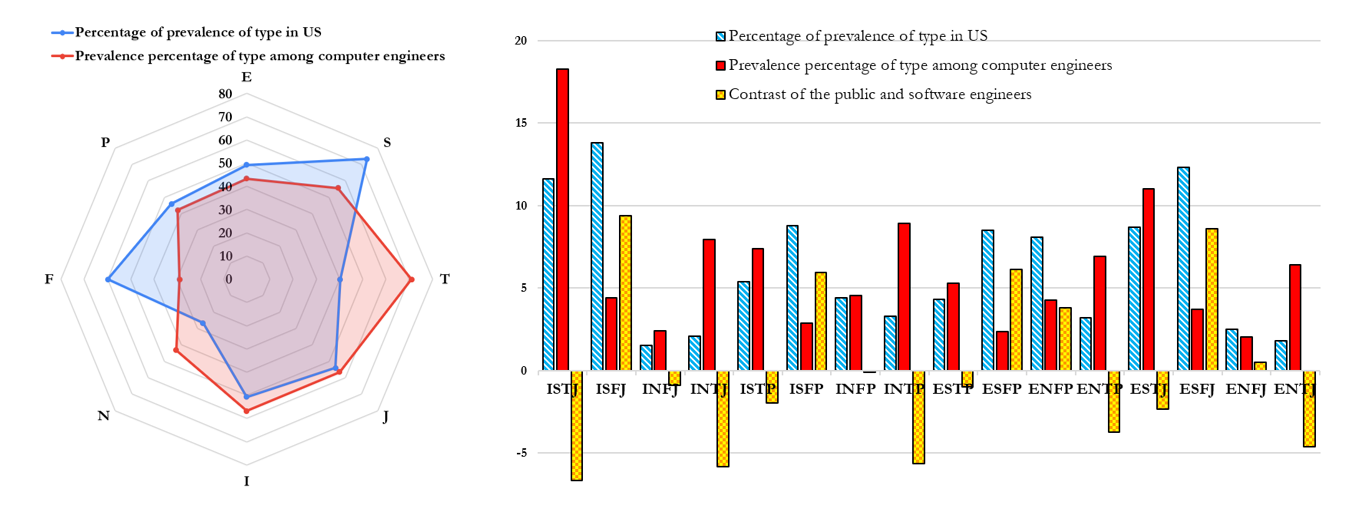
that software engineers in Iran predominantly exhibit a thinking personality rather than a
feeling one. Moreover, personality types such as ISTJ, INTJ, ESTJ, and ENTJ were observed to
be more prevalent among software engineers, while ISFJ, ISFP, ESFP, ENFP, and ESFJ were less
common. While these results align with global trends, there are also noteworthy distinctions
among Iranian software engineers. The implications of our research extend to practical
applications for managers, human resources specialists, and recruiters. By understanding
software engineers' personality types and traits, employers can optimize talent acquisition
strategies, improve job placements, and tailor career development programs accordingly. This
knowledge is helpful for students and those interested in a career in software engineering.
It aids in making informed decisions that meet the field's requirements.